What Arabic Speakers Call Their Own Language
Ask a Moroccan what language they speak at home and the answer may not be "Arabic" — it may be al-darija. The names Arabic speakers use for their own language are not interchangeable. Each one is a small daily act of self-positioning inside the language.

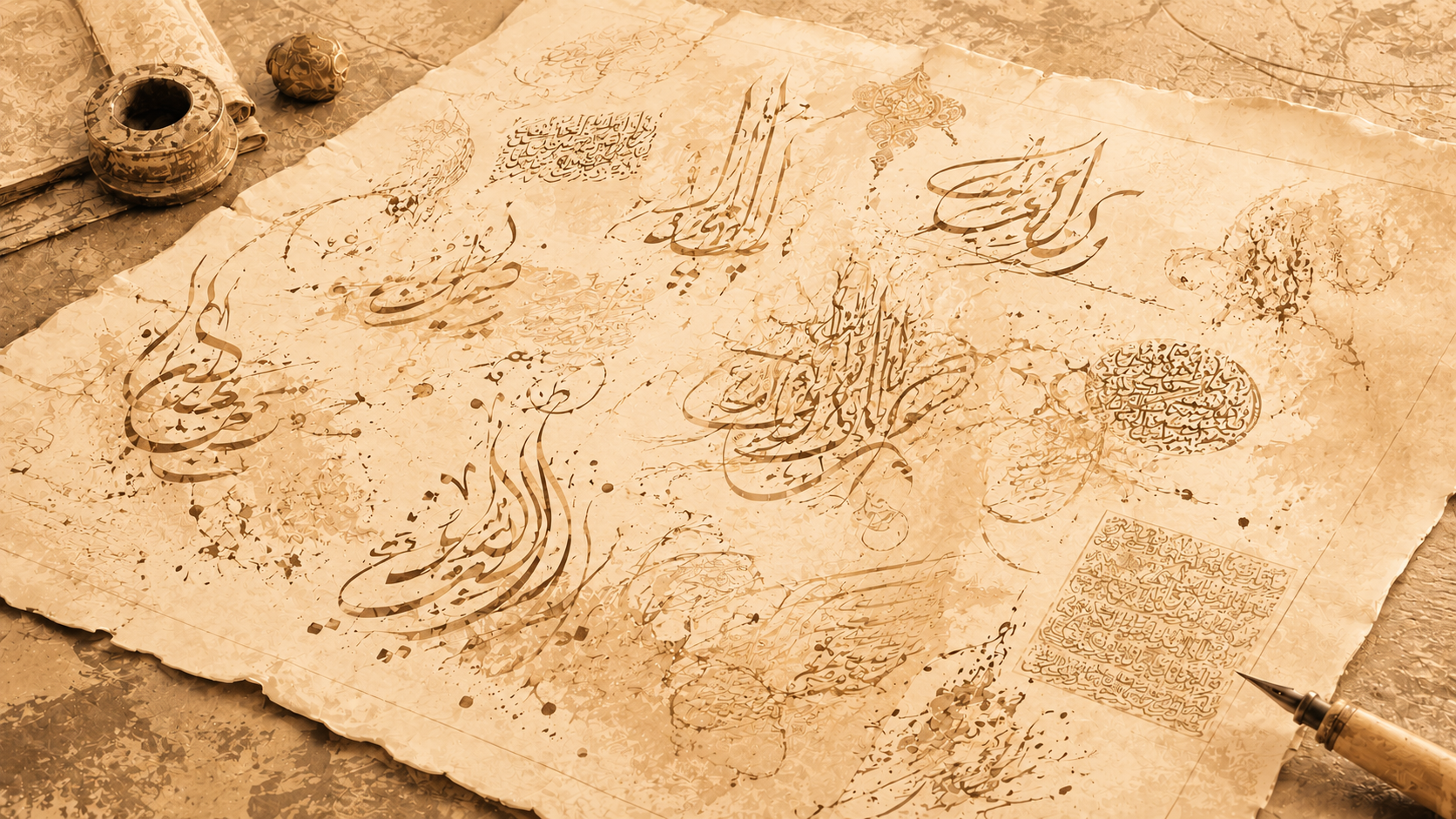
The names a language carries reveal the position of its speakers within it. On al-fuṣḥā, al-ʿāmmiyya, al-darija, and the small daily act of self-positioning that every speaker performs when they choose what to call the language they speak.
Ask a Moroccan in casual conversation what language they speak at home, and the answer you receive will, in many cases, not be "Arabic." It will be al-darija — the colloquial — a word that, in its everyday use, is set in implicit contrast against al-ʿarabiyya, the Arabic of the Quran and the schoolroom and the news broadcast. A speaker who answers this way is not making a separatist linguistic claim. They are not denying that al-darija descended from Arabic, that it carries Arabic vocabulary, that it sits inside the Arabic-speaking world. They are simply naming the language they actually speak by the name that language carries in daily life. Al-ʿarabiyya is something else — the formal register, the language of the page, the language one is expected to know but not necessarily to speak.
Ask the same question to a Cairene, and the answer will likely be different. They will say al-ʿarabiyya, or al-maṣrī, or simply bitkallim ʿarabī — I speak Arabic. The Egyptian relationship to the name is closer, less differentiated. Al-maṣrī — Egyptian — is acknowledged as a variety of Arabic, not as a sibling to it. The hierarchy is still there, but the rhetorical distance between formal and colloquial is smaller.
Ask a Lebanese the same question and you will get yet another configuration — bḥkī ʿarabī, bḥkī libnānī, bḥkī ʿāmmiyyeh, depending on the moment and the interlocutor and the politics of the conversation.
Each of these answers is a small political act. To call one's everyday language al-ʿarabiyya is to claim continuity with the long tradition of formal Arabic letters. To call it al-darija or al-ʿāmmiyya is to acknowledge a distance from that tradition. To call it al-maṣrī or al-libnānī or al-shāmī is to anchor it in a specific place. None of these names is more correct than the others. Each names something real, and each names it differently.
This is an article about those names — what they are, what they reveal, and what is at stake when a speaker chooses among them.
Al-ʿArabiyya
The umbrella term, in its formal sense, is al-lugha al-ʿarabiyya — the Arabic language — or simply al-ʿarabiyya, the Arabic. It is the name used in official documents, in school curricula, in academic linguistics, and in international contexts. When the Arab League refers to Arabic as one of the official languages of its member states, it refers to al-ʿarabiyya. When a Moroccan and a Saudi meet at an international conference and recognize that they share a language, the language they share is al-ʿarabiyya.
But al-ʿarabiyya in this umbrella sense is, in practice, almost identical with what linguists call Modern Standard Arabic and what speakers themselves call al-fuṣḥā. The umbrella, in other words, is the formal register. The spoken varieties — al-ʿāmmiyya, al-darija, the regional dialects — sit underneath the umbrella but, in conversation, often go by names that distinguish them from it. The umbrella term and the formal register are functionally the same thing in everyday speech.
This produces a small but important asymmetry. When a speaker says they speak al-ʿarabiyya, they usually mean al-fuṣḥā — the formal, written, broadcast register. When a speaker says they do not speak al-ʿarabiyya well, they often mean they do not speak the formal register well, even though they may be entirely fluent in the spoken variety of their region. A learner who says they want to learn al-ʿarabiyya will be assumed to want to learn the formal register. A learner who says they want to learn al-darija or al-maṣrī will be assumed to want to learn the spoken variety of a specific place.
The umbrella, then, is not as wide as it appears. Al-ʿarabiyya covers everything in principle, but in daily use it lifts upward toward the formal register and leaves the spoken varieties to be named separately.
Al-Fuṣḥā
Al-fuṣḥā — literally "the most eloquent" — is the name that the formal register carries when speakers want to be specific about what they mean. The word is a feminine superlative built from a root that suggests clarity and articulateness. To call a register al-fuṣḥā is to claim for it a kind of linguistic excellence that is older than any modern question of usefulness or comprehension.
The name has theological weight. Al-fuṣḥā in its classical form is the Arabic of the Quran, and the same root appears in the Islamic tradition as a quality attributed to the Prophet's speech — afṣaḥu al-ʿarab, the most eloquent of the Arabs. The register is not just formal in the modern sense; it is hallowed. It carries the inherited authority of fourteen centuries of religious, literary, and legal usage. Even in entirely secular contexts — a news broadcast, a parliamentary speech, a university lecture — al-fuṣḥā arrives with this weight in the background.
The practical consequence of the name is a hierarchy. Al-fuṣḥā is positioned above the spoken varieties not just functionally but morally. It is what one is taught to aspire to in school. It is what marks a speaker as educated. It is what literary writing is composed in, what serious journalism is composed in, what theology is composed in. A speaker who can move easily into al-fuṣḥā is a speaker who can participate in the high culture of the Arab world. A speaker who cannot — and most speakers, in honest practice, cannot move into it as easily as they might wish — is positioned, however gently, lower on the cultural ladder.
This hierarchy is not stable. It is contested, sometimes openly, by writers and speakers and filmmakers who argue that the spoken varieties have their own dignity and their own claim to literary seriousness. But the hierarchy is still the default. A speaker who calls their everyday language al-ʿāmmiyya is, by the very choice of name, accepting a position beneath al-fuṣḥā.
Al-ʿĀmmiyya
Al-ʿāmmiyya — literally "the common" — is the most widely used name for the spoken Arabic of any region. It is the standard term in linguistic discussion, in literary criticism, in education, and in the consciousness of educated speakers across the Arab world. To say that one speaks al-ʿāmmiyya is to name what one actually speaks at home, with friends, in the market, on the street. The name is honest in a way that al-ʿarabiyya is not — it admits that what is being spoken is not the formal register, that it has its own grammar and its own vocabulary, that it is the language of common life rather than of high culture.
But the word ʿāmmiyya carries baggage. The root from which it is built, ʿ-m-m, gives Arabic words like al-ʿāmma — "the common people," sometimes "the masses" — and the connotation is not always neutral. To call one's language al-ʿāmmiyya is to call it the language of the common people, with whatever weight that phrase carries in any given context. In a hierarchy that places al-fuṣḥā — the eloquent — at the top, al-ʿāmmiyya sits at the bottom by the implication of the names themselves.
This is a real cost, and it shapes how speakers feel about their own language. A speaker who has been told from school onward that their everyday speech is ʿāmmiyya — common, low, vulgar in the older sense of the word — internalizes a small distance from their own mother tongue. The language they speak with their family, the language in which they joke and argue and dream, is, in the rhetoric of the broader culture, the lesser language. Al-fuṣḥā — the language of school and of the Quran and of the news — is the higher one.
Many Arab speakers feel this distance acutely. Many do not. The relationship varies by country, by class, by education, by individual temperament. But the distance is structural, encoded in the names, and a learner who pays attention to which names a speaker uses for their own language will learn something about how that speaker relates to their own speech.
Al-Darija
In the Maghreb — Morocco, Algeria, Tunisia, and to some extent Libya — the name for the spoken language is not al-ʿāmmiyya but al-darija. The two words are not synonyms in their full implications, even though both name the spoken vernacular as opposed to the formal register.
Darija comes from a root that suggests stepping, walking, advancing along a path. The name positions the language as something practical and ambulatory, the language one uses in the going about of daily life. There is no implication in the name itself of lowness or vulgarity. Darija is the language one walks in.
But al-darija in the Maghreb has, in everyday usage, drifted further from al-ʿarabiyya than al-ʿāmmiyya has in the East. A Moroccan, asked what language they speak, may distinguish al-darija from al-ʿarabiyya in a way that a Cairene would never distinguish al-ʿāmmiyya from al-ʿarabiyya. The Egyptian colloquial is, in the Egyptian self-conception, a form of Arabic. The Moroccan colloquial is, in the Moroccan self-conception, often something close to its own thing — Arabic-derived, Arabic-related, but not quite the same as al-ʿarabiyya in the way al-ʿarabiyya is understood in formal contexts.
Why this is so is partly a function of linguistic distance. Darija carries heavy Berber, French, and Spanish substrates, and its grammar and vocabulary diverge from al-fuṣḥā much more sharply than do the dialects of the East. Mutual intelligibility between darija speakers and Egyptian or Levantine speakers, in the absence of some adjustment, is genuinely limited. The greater linguistic distance produces a greater conceptual distance, and the language acquires its own name and its own status accordingly.
This has political consequences. There has been, particularly in Morocco, a sustained debate about whether darija should be recognized as a literary and educational language in its own right, written and taught alongside al-fuṣḥā. The argument has serious advocates and serious opponents, and the question is unresolved. But the existence of the debate itself reveals something important: in the Maghreb, the spoken language is not assumed by everyone to be a corruption of the formal register. It is, at least in some quarters, a candidate for its own dignity.
The Regional Names
Beneath the umbrella terms, each region's spoken variety has its own name, and these names function as another layer of identification.
Al-maṣrī — Egyptian — is the Egyptian colloquial. Speakers will use the term in casual contexts to specify what register they are speaking in, especially when distinguishing from al-fuṣḥā or from the colloquials of other regions. An Egyptian writer who composes a novel in the spoken language is writing bil-maṣrī — in Egyptian — even though the result is, in formal classification, al-ʿāmmiyya al-maṣriyya, Egyptian colloquial.
Al-shāmī — Levantine — covers the spoken varieties of Syria, Lebanon, Palestine, and Jordan. The name comes from al-Shām, the historical name for the broader region of greater Syria, and a speaker who claims al-shāmī as their language is positioning themselves within that historical geography. Lebanese speakers will sometimes specify further — libnānī, Lebanese — when emphasizing the Lebanese dialect specifically. Palestinians will sometimes say falastīnī. The names cascade in specificity from the broadest regional term down to the most local.
Al-khalījī — Gulf — names the dialects of the Arabian Peninsula's eastern coast. The word comes from al-khalīj, the Gulf, and so the name positions the language by reference to its geography. Within al-khalījī there are further sub-names: al-saʿūdī, al-kuwaytī, al-imārātī. A speaker who says they speak al-khalījī is making a regional claim; a speaker who specifies further is drilling down to the particular country.
Al-ʿirāqī, al-yamanī, al-sūdānī, al-lībī — Iraqi, Yemeni, Sudanese, Libyan — each name their respective national varieties. Each of these names carries a small geographic anchor that makes the language local in a way that al-ʿarabiyya does not.
A learner who pays attention to which names speakers use for their own language will hear something important about where the speaker locates themselves. A speaker who calls their language al-ʿarabiyya is making a broad claim of belonging to the Arabic-speaking world. A speaker who calls it al-maṣrī or al-shāmī is anchoring it to a place. A speaker who calls it al-darija is, depending on context, either acknowledging the spoken register or quietly distancing it from the formal one. The name is never just a name. It is always also a position.
There is a broader observation worth ending on.
Languages, in the abstract, are convenient fictions. They are real in the sense that there is something the name refers to — a body of vocabulary, a set of grammatical patterns, a community of speakers — but the boundaries of that something are always negotiated, always contested, always more porous than the name suggests. What we call English includes the speech of London and the speech of Mumbai and the speech of Lagos and the speech of Atlanta, and the differences between these are real, and the choice to call them all "English" is a choice that elides those differences in favor of a perceived unity. The same is true of all major languages.
But Arabic carries this complexity more visibly than most. The names a speaker has for their own language are not one but many, and the choice among them is a small daily act of self-positioning. Al-ʿarabiyya, al-fuṣḥā, al-ʿāmmiyya, al-darija, al-maṣrī, al-shāmī, al-khalījī, al-ʿirāqī — each of these names something that is, by some measure, the same language. Each names it differently. Each foregrounds a different aspect of the speaker's relationship to it.
A learner who pays attention to these names is paying attention to something important. The way speakers name their languages is the way they position themselves inside their languages, and the position the speaker takes is always, in some quiet way, an argument about what their language is and what they want it to be.
The names matter. They are not interchangeable, and a learner who treats them as interchangeable will miss what is being said.
— A.C. Maas